
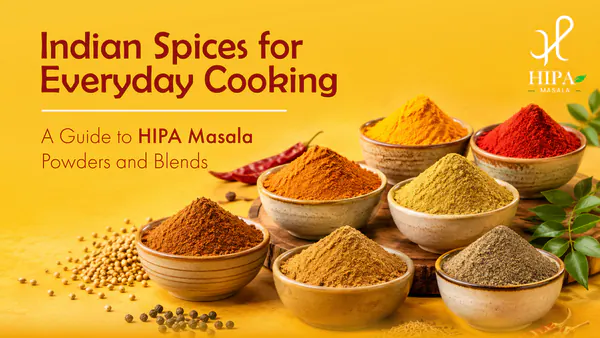
Indian spices are used in countless ways across regional cuisines and home kitchens. A pinch of turmeric can add earthy flavor and colour, cumin can bring warm depth, and pepper can contribute a sharp, warming note. Prepared masala blends combine several ingredients to season dishes such as sambar, rasam, and curry.
Knowing the difference between a single spice powder and a blend can make everyday cooking easier. In this guide, we’ll look at how to choose and use both, with examples from the HIPA Masala spice range.
Single spice powders and masala blends: What’s the difference?
A single spice powder is made from one main spice. Examples include turmeric powder, cumin powder, and black pepper powder. These are useful when you want to add one distinct flavor or adjust individual seasonings to suit a recipe.
A masala blend combines multiple ingredients. The proportions and ingredients vary by recipe and brand. A prepared blend can be convenient when you want a seasoning designed for a particular dish or style of cooking.
Neither option is automatically better. Many cooks keep both single spice powders and blends in their kitchen so they can choose what works for each meal.
Everyday Indian spice powders from HIPA Masala
The spices you need depend on the meals you prepare most often. Here are some examples from the HIPA Masala range and the kinds of dishes listed on the product pages.
Turmeric powder
HIPA Turmeric Powder is made from selected dried turmeric rhizomes, according to the product information. Turmeric is commonly used in dals, vegetables, rice dishes, sambar, curries, and marinades. Its colour can vary naturally, so evaluate products using their ingredient information and packaging rather than colour alone.
Cumin powder
HIPA Cumin Powder is listed as 100% selected whole cumin seeds. Ground cumin can be used in dals, raita, chaats, marinades, and rice dishes. Whole cumin seeds are also useful when a recipe calls for tempering or a more noticeable seed texture.
Pepper powder
HIPA Pepper Powder is listed as 100% selected dried black peppercorns. Pepper powder can be used to season soups, rasam, pongal, vegetables, eggs, marinades, and other dishes. Add it gradually to control the warmth and intensity.
HIPA Masala blends for familiar dishes
Some recipes call for a combination of spices rather than a single seasoning. HIPA Masala’s product range includes blends intended for several common preparations.
Sambar powder
HIPA Sambar Powder is a blend formulated for South Indian sambar. The listed ingredients include coriander seeds, dried red chillies, cumin seeds, fenugreek seeds, black peppercorns, toor dal, chana dal, turmeric, and asafoetida. Check the product page and packaging for the current details and suggested use.
Rasam powder
HIPA Rasam Powder is listed with coriander seeds, cumin seeds, black peppercorns, dried red chillies, toor dal, turmeric, and asafoetida. The product page describes it as suitable for tomato, tamarind, and pepper rasam preparations.
Garam masala
HIPA Garam Masala is a blend that the product page lists for dishes such as biryani, pulao, paneer gravies, and curries. Its stated ingredients include coriander, cumin, black pepper, cinnamon, cloves, cardamom, bay leaf, star anise, nutmeg, and mace.
Product formulations and directions may change. Check the label or official product page before relying on specific ingredient or usage details.
How to choose spices for your kitchen
Start with the dishes you make most often. If your everyday meals include dals and vegetable dishes, individual spices may offer flexibility. If you prepare sambar or rasam regularly, a blend intended for that dish may be a convenient addition.
When comparing spice products, consider:
- Ingredients: Check whether the product is a single spice or a blend.
- Usage guidance: Look for directions that match the dishes you cook.
- Pack size: Choose a size that suits how frequently you use the product.
- Storage instructions: Follow the package guidance to help maintain quality.
- Dietary information: Review allergen and ingredient details where relevant.
When trying a new product, begin with the quantity recommended on the package or start with a smaller amount. Taste the dish and adjust to your preference.
How to use spice blends without overpowering a dish
A blend can have a stronger flavor than expected, especially if you are unfamiliar with it. Add it gradually and taste as you cook. Consider the amount of food, the other seasonings in the recipe, and whether the blend contains ingredients such as salt.
For a first attempt, try the blend in a familiar dish. This makes it easier to notice how it changes the flavor. You can also keep a note of the amount and method you liked so you can repeat it next time.
Storing spice powders and blends
Spices are used for their flavor and aroma, so storage matters. Keep packages sealed and follow the storage instructions on the label. In general, store spice products in a cool, dry place away from direct sunlight, stovetop heat, and steam. Use a clean, dry spoon to avoid introducing moisture.
Explore HIPA Masala spices
A useful spice shelf doesn’t have to be complicated. Choose products that fit the dishes you enjoy, check the ingredient and usage information, and use them in amounts that suit your cooking.
Browse the complete HIPA Masala product range to explore spice powders and blends. You can also visit the HIPA Masala blog for more cooking-related content.
How do you use spice powders and masala blends most often in your kitchen?