
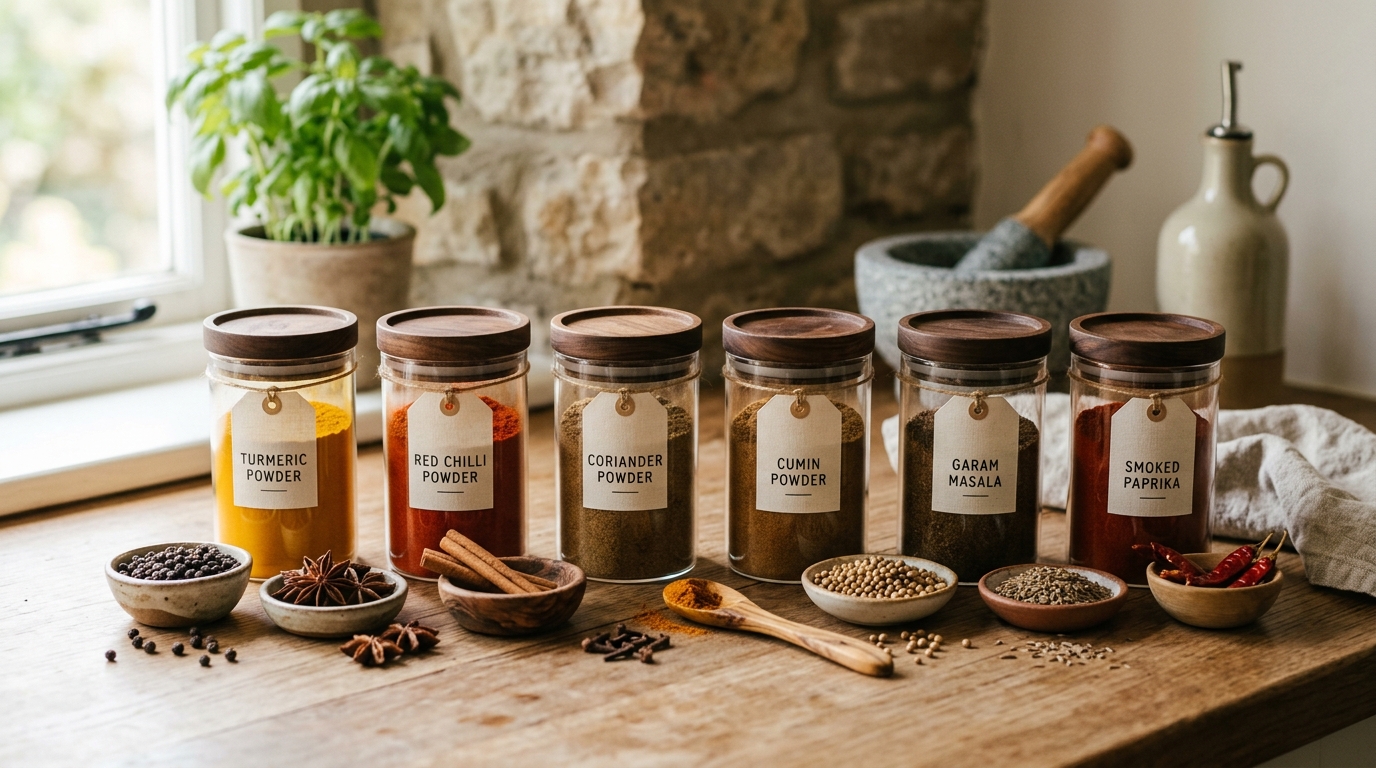
Indian cooking relies heavily on the vibrant fragrance and potency of ground spice powders and traditional masala blends. However, ground spices are delicate: their flavour and aroma come from volatile essential oils (such as curcumin in turmeric, piperine in black pepper, linalool in coriander, and cuminaldehyde in cumin) that degrade quickly when exposed to environmental elements.
The Four Enemies of Spice Freshness
To preserve the peak potency and colour of your spice powders, you must protect them from four primary environmental factors:
- Light: Direct sunlight and bright kitchen light break down pigments and speed up the oxidisation of volatile essential oils.
- Heat: Storing spices directly above a cooking range or near ovens causes temperature fluctuations, drying out natural oils and dulling aroma.
- Moisture: Steam from simmering pots or damp measuring spoons introduces water droplets, leading to clumping, mould growth, and bacterial spoilage.
- Air (Oxygen): Prolonged contact with oxygen oxidises aromatic compounds, turning bright powders dull and reducing their culinary punch.
Best Practices for Storing Indian Spices at Home
1. Choose Airtight, Non-Reactive Containers Always store freshly ground spice powders in airtight glass, high-grade stainless steel, or ceramic jars with silicone seals. Avoid porous plastics, which absorb spice oils and let microscopic air circulate over time.
2. Keep Jars in a Cool, Dark Pantry or Drawer Store daily cooking spices in a dedicated kitchen drawer or closed spice cupboard away from the stove and direct sunlight. Keep the bulk reserve in an airtight pantry container and only refill smaller counter jars as needed for 2–3 weeks of cooking.
3. Never Spoon Spices Directly Over Steaming Pots The common habit of holding a spice jar over a boiling pot of sambar, rasam, or curry allows hot steam to enter the container. This causes the powder to clump and encourages microbial activity. Instead, measure spices onto a clean, completely dry spoon or small prep bowl away from the stove.
4. Understand the Shelf Life of Ground Spices vs Whole Spices While whole spices can retain their freshness for 2 to 3 years when kept dry, finely ground powders have a larger surface area exposed to air. For optimum flavour and aroma, aim to use pure spice powders and roasted masala blends within 6 to 12 months of manufacturing.
Spice Storage Quick Reference Guide
| Spice Type | Best Container | Storage Location | Expected Peak Freshness |
|---|---|---|---|
| Pure Spice Powders (Turmeric, Chilli, Coriander, Cumin, Pepper) | Airtight glass or stainless steel container | Dark, cool cupboard / pantry drawer | 6 – 12 months |
| Roasted Masala Blends (Sambar Powder, Rasam Powder) | Airtight jar with tight silicone gasket | Cool cabinet away from heat sources | 6 – 9 months |
| Whole Spices (Mustard, Fenugreek, Cinnamon, Cloves, Cardamom) | Sealed glass jar or traditional masala dabba | Kitchen drawer or spice rack | 1 – 2 years |
| Finishing Blends (Garam Masala) | Small airtight glass jar | Dark drawer, sealed promptly after each pinch | 6 months |
How HIPA Masala Protects Freshness at the Source
At HIPA Masala in Pallavaram, Chennai, our manufacturing approach is engineered specifically to preserve natural aromatic oils from raw spice selection to final packaging:
- Controlled Low-Temperature Milling: We mill whole spices at carefully controlled low temperatures, ensuring friction heat does not vaporise delicate volatile oils.
- Traditional Slow-Roasting for Blends: Whole spices and lentils for our Sambar Powder and Rasam Powder are gently roasted before grinding to lock in traditional aroma.
- Zero Additives or Artificial Colours: We use 100% natural, pure spices without anti-caking chemicals, artificial dyes, or preservatives.
- Multi-Layer Barrier Packaging: Our retail and institutional packs use food-grade barrier pouches that block ambient moisture, light, and air until opened.
Explore the complete HIPA Masala product range to learn more about our traditional pure spices and blends.