
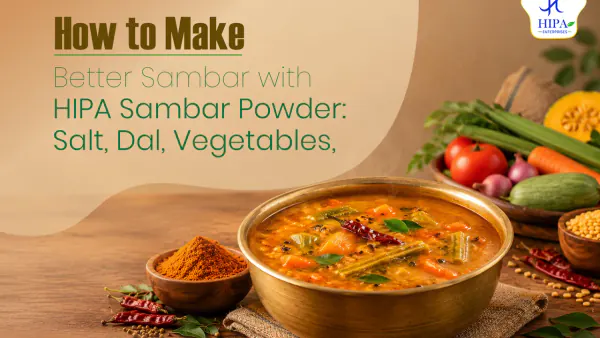
Sambar is a comforting South Indian dish made in many different ways. Its flavor can change with the choice of dal, vegetables, tamarind, seasoning, and sambar powder. If you're making it at home, HIPA Sambar Powder is a convenient seasoning option made with coriander, dried red chillies, cumin, fenugreek, black pepper, toor dal, chana dal, turmeric, and asafoetida. Check the HIPA Sambar Powder product page for the full ingredient list and current usage guidance.
This guide answers common questions about making sambar, from how much salt and dal to use to why sambar is often yellow and whether a little sugar belongs in it.
How much salt should you add to sambar?
There is no single salt measurement that works for every sambar recipe. The right amount depends on the quantity of water, dal, vegetables, and tamarind. HIPA Sambar Powder contains no added salt, according to its official product information, but always check the packaging of any blend you use.
Start with a small amount of salt while the sambar is cooking. Taste it after the ingredients have simmered together, then adjust gradually.
Tip: Tamarind contributes sourness, and vegetables can affect the final flavor. Taste the cooked sambar before making your final seasoning adjustment.
How much dal should you add to sambar?
The amount of dal depends on how thick you like your sambar and how much you're preparing. A higher proportion of cooked dal generally makes the dish thicker, while more water makes it thinner.
For a first attempt, follow a tested recipe's dal-to-water proportions, then adjust the consistency to your preference. Cook the dal until soft and mash it before combining it with the vegetables and seasonings. If the sambar becomes too thick, add hot water a little at a time and simmer briefly.
For product-specific seasoning guidance, see the HIPA Sambar Powder page, which lists a suggested quantity for a family-sized preparation.
What is the best masala brand for sambar?
The "best" sambar masala depends on the flavor you enjoy, the ingredients you prefer, and how convenient the product is for your cooking. Compare product labels, check for allergens, and follow each brand's preparation instructions.
If you're considering HIPA, explore the details for HIPA Sambar Powder, including its ingredient list, flavor profile, pack sizes, and suggested uses. Start with the quantity stated on the label—or a smaller amount if you're unsure—and adjust after tasting.
Can you put sugar in sambar?
Some cooks add a small amount of sugar or jaggery to balance a particularly tangy sambar, while others prefer not to sweeten it. It is optional, not essential.
First taste the sambar after adding tamarind and sambar powder. If the sourness feels too strong, adjust the balance gradually. You can also review the quantities of tamarind and water in your recipe before adding a sweetener.
When does sambar become more yellow?
Sambar's color comes from its ingredients and proportions. Turmeric and the spices in the sambar powder can influence the final shade. Different powders and recipes can produce different colors, so sambar is not always the same shade of yellow.
HIPA Sambar Powder includes turmeric in its listed ingredients. For the full blend details, see the product ingredients and information. Don't add extra turmeric just to make the dish more yellow; too much can affect the flavor.
Is sambar good for health?
Sambar's nutritional content depends on the ingredients and how it is prepared. Dal contributes nutrients, while vegetables add variety to the dish. The amount of salt, oil, and other ingredients also affects the overall meal.
The National Institute of Nutrition's Indian Food Composition Tables provides nutrient data for individual foods, but it does not determine the nutrition of every sambar recipe. For specific dietary needs, consider the full recipe and consult a qualified health professional.
Is sambar dal good for health?
Dal is a common ingredient in sambar and contributes nutrients to the dish. The final nutritional value depends on the quantity used, the rest of the ingredients, and the portion served. Sambar can be part of a varied meal, but it should not be described as a treatment or guaranteed health solution.
Why does sambar have so many vegetables?
Vegetables add different textures and flavors to sambar and make it easy to adapt to what is available. Common choices vary by household and region. You can use one or several vegetables, cut them into similar-sized pieces, and cook them until tender without losing their shape.
When adding vegetables, consider how quickly each one cooks. Add firm vegetables earlier and quicker-cooking vegetables later so they finish at about the same time.
Why is sambar so famous in South India?
Sambar is widely enjoyed across South India and appears in many home and restaurant meals. It is served in different ways, including with rice, idli, and dosa. Recipes vary between regions and households, so there isn't just one version of sambar.
Food history can be complex. One account describes a connection to the Maratha royal kitchen in Thanjavur, with lively debate among food historians and culinary enthusiasts. It's accurate to say that sambar has a rich and debated history across Tamil Nadu and South India.
Make your next pot of sambar your own
A good sambar comes down to balance: tender dal, vegetables cooked to your liking, seasoning adjusted to taste, and a consistency you enjoy. HIPA Sambar Powder is made for authentic South Indian sambar and can also be explored through its official product details. Browse all HIPA Masala products to see the wider spice range.
Have a question about the product or bulk supply? Visit the HIPA Masala contact page or B2B enquiries page to get in touch.